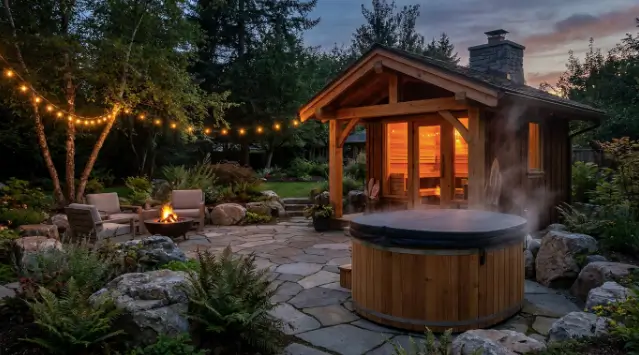
A traditional sauna kit heats the air to 150 to 195 degrees Fahrenheit using an electric or wood-fired heater and stones, and it usually needs a dedicated 240-volt circuit. An infrared kit warms the body directly at a lower ambient temperature, generally 120 to 150 degrees, heats up in 10 to 15 minutes, and often plugs into a standard household outlet. Neither is the objectively correct choice. The right pick comes down to how much heat you actually want, what your electrical panel can support, and how fast you need the unit ready on a weeknight. Working through the decision in order avoids buying the wrong style and returning it later.
Step 1: Decide How Hot You Actually Want It
Start with sensation, not spec sheets. Traditional heat is sharp and immediate, the kind that makes a new user step back out after four minutes, and it can include steam by pouring water over hot stones, called loyly in Finnish sauna tradition. Infrared heat builds more gradually and feels lower-intensity even at the top of its range, since it warms tissue directly rather than heating the surrounding air first. People who grew up with a Finnish-style sauna, or who want the option of steam, almost always end up happier with a traditional kit. People who find high heat uncomfortable, or who want a fifteen-minute session before work rather than a forty-five-minute production, tend to prefer infrared. There is no wrong answer here, only a mismatch between expectation and what gets bought. A useful gut check is to think back to the last time a hot shower or a sweaty hour outside felt good rather than uncomfortable; a person who leans toward that feeling usually gravitates to traditional heat, while someone who prefers a warm, low-key sweat leans infrared.
Step 2: Check What Your Electrical Panel Can Support
This step eliminates options fast. Most infrared kits sized for two to three people draw under 1,700 watts and run on a standard 15- or 20-amp household circuit, which means no electrician in many homes. Traditional heaters above roughly 6 kilowatts, which covers most three-person-and-up cabins, need a dedicated 240-volt circuit, and plenty of houses do not have spare capacity in the panel for one without an upgrade. Before comparing kit styles any further, it is worth a five-minute call to an electrician to find out what a new circuit would cost from your specific panel, since that number can swing the total cost of a traditional kit by a thousand dollars or more depending on distance and whether the panel itself needs work.

Step 3: Think About How Fast You Need It Ready
Heat-up time is where daily habits collide with kit choice. An infrared cabin reaching operating temperature in 10 to 15 minutes fits a routine squeezed between a shower and dinner. A traditional electric heater typically needs 30 to 45 minutes to reach full temperature, and a wood-fired unit can take an hour or more once you account for building the fire, which works fine for a weekend ritual but rarely for a Tuesday night after work. Anyone planning to use a kit most days of the week should weight this step heavily, since a kit that takes too long to heat tends to get used far less often than the buyer originally planned. It is worth being honest about actual habits rather than aspirational ones here; a fast-heating kit that gets used four nights a week beats a slower one bought for weekend rituals that quietly slip to once a month.
Step 4: Compare Kit Sizes for Your Space
Traditional cabin and barrel kits generally run larger, with a two-person barrel needing roughly 6 to 7 feet of clearance in diameter plus rain runoff space if it sits outside uncovered. Infrared cabins are commonly built tighter, with two-person units fitting into a footprint as small as 4 by 4 feet, which makes them a common choice for a garage corner, a covered porch, or a spare bedroom. Measure the actual install spot, including door swing and any roofline clearance for outdoor units, before settling on a style, since a barrel that looks reasonable in a listing photo can be surprisingly tight against a fence line or a house wall once it is on site.
Step 5: Compare Total Cost Including Install
Sticker price alone is misleading. A two-person infrared kit often lists for $2,000 to $3,500 with no additional electrical cost. A comparable traditional cabin or barrel kit typically runs $4,000 to $8,000 once you add a heater, and can climb further once a new circuit, a pad, and delivery are factored in. Sweat Decks breaks out heater kilowatt rating and interior volume by model, which is worth checking line by line against your Step 2 electrical answer before comparing any two kits on price alone. A review of the evidence around regular sauna use, spanning both traditional and infrared practice broadly, has found consistent reported use of both styles across health-focused reviews, though most of the strongest cardiovascular research specifically comes from traditional Finnish-style sauna rather than infrared.
Step 6: Make the Call
If Step 2 rules out a new 240-volt circuit, the decision is largely made for you: infrared. If steam, higher heat, or a shared Finnish-style ritual matters more than convenience, traditional wins even with the extra electrical cost. Most buyers who go through all five prior steps in order find the answer becomes obvious well before they reach a final price comparison, since electrical capacity and desired heat intensity rule out one category for most households before cost even enters the picture.
Frequently Asked Questions
Is an infrared sauna kit as hot as a traditional one? No. Infrared cabins typically run 120 to 150 degrees Fahrenheit and warm the body directly, while traditional electric or wood-fired kits heat the air to 150 to 195 degrees. The sensation is different even when both feel intense to a new user.
Does an infrared sauna kit need special electrical work? Most two- to three-person infrared kits plug into a standard 120-volt outlet and need no electrician. Larger infrared cabins and most traditional heaters above roughly 6 kilowatts need a dedicated 240-volt circuit, which is worth pricing out before ordering.
Which sauna kit type heats up faster? Infrared cabins generally reach a usable temperature in 10 to 15 minutes. Traditional electric heaters typically need 30 to 45 minutes to reach full temperature, and wood-fired units can take an hour or more depending on the fire and outdoor conditions.
Can you add steam to an infrared sauna kit? No. Infrared kits do not include a rock bed, so there is nothing to pour water over. Steam, or loyly in Finnish sauna tradition, is only possible in a traditional kit with an electric or wood-fired heater and stones.
References
- Cardiovascular and Other Health Benefits of Sauna Bathing: A Review of the Evidence, Mayo Clinic Proceedings, 2018
- Effects of heat and cold on health, with special reference to Finnish sauna bathing, American Journal of Physiology, 2018
- Benefits and risks of sauna bathing, The American Journal of Medicine, 2001
By Marcus Webb