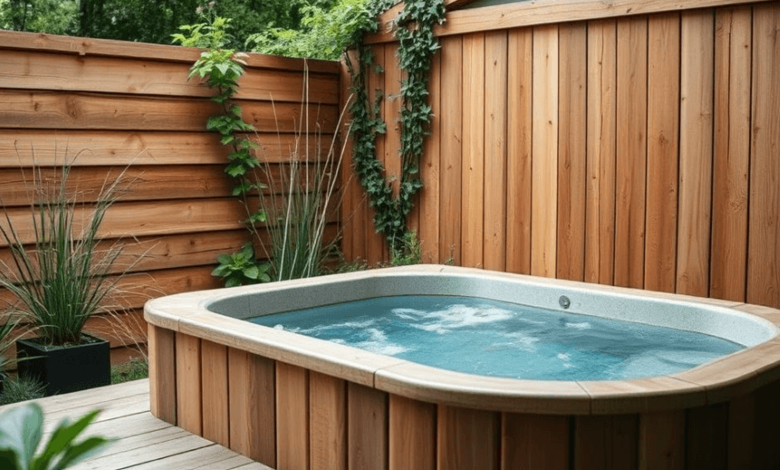
Picking an Outdoor Sauna That Survives Four Seasons is worth evaluating through the homeowner’s real week, not a perfect catalog photo. The best setup is the one that gets used, stays safe, and does not become a maintenance headache.
My neighbor Tom in suburban Minneapolis spent $7,200 on a nice cedar barrel sauna last October. He set it up on a patch of pea gravel he’d raked flat over a weekend, ran an extension cord from his garage, and invited me over for the inaugural session. By January the barrel had shifted two inches downhill. The gravel had heaved. And the extension cord setup, which I’d warned him about, tripped the breaker every third session when the heater cycled at full draw. He loves the sauna. He hates everything around it. His story is the reason this article exists.
The sauna itself is almost never the problem. The pad, the electrical, and the climate prep are where outdoor builds go sideways. Get those right and you end up with something you actually use four or five nights a week. Get them wrong and you’ve got a $7,000 garden ornament.


Why Outdoor (and Why the Logistics Matter More Than the Unit)
Most people shopping for a home sauna start by comparing heater wattage and wood species. That’s backwards. The first question is where this thing goes and how it gets power.
Indoor saunas have a humidity problem. Moisture migrating into wall cavities causes mold, peeling paint, and long-term structural damage unless you engineer a proper vapor barrier, which most residential bathrooms aren’t built for. Outdoor placement sidesteps all of that. The sauna breathes into open air. Your house stays dry. Simple.
But outdoor placement introduces its own variables: frost heave, drainage, UV exposure on the wood, a potentially long electrical run from your main panel, and local permitting rules that vary wildly by county. The same $6,000 cabin kit can be a fantastic purchase on a reinforced concrete pad with a clean 240V circuit, or a headache on settled gravel with an undersized breaker. Same product, completely different experience.
Reading a Spec Sheet Without Getting Lost
Here’s the short list of things that actually matter when you’re comparing models:
Heater sizing. Match the heater to the cabin volume. A 4.5 kW heater works for a compact 4×6 barrel. A 7.5 to 9 kW heater suits an 8×10 cabin. Undersized heaters run constantly and die early. Oversized heaters cycle too hard and waste electricity. Every reputable manufacturer publishes a sizing chart. Use it instead of guessing from a Reddit thread.
Wood and joinery. Cedar, hemlock, thermo-aspen, and redwood are all standard. The real differentiator is the joinery. Pre-cut tongue-and-groove cladding holds heat and looks good for years. Cheap builds use butt joints sealed with felt strips. Those leak heat within the first season and look weathered by the second.
Insulation. Cabin models should have R-12 wall insulation minimum for cold climates. Barrel saunas generally lack wall insulation (the stave construction and air gap are the insulation), which is why they work best in moderate climates or with a slightly larger heater in northern states.
For cold plunges (if you’re building a contrast setup): check chiller horsepower, filtration micron rating, and whether the tub includes ozone or UV sanitation. A 1/3 HP chiller holds 50°F in a small insulated tub in temperate weather. Come August in Phoenix, that same chiller is outmatched.
What the Research Actually Shows
The strongest sauna data comes from the Laukkanen 2015 cohort study published in JAMA Internal Medicine. Researchers followed 2,315 middle-aged Finnish men for 20 years and found a dose-response relationship between sauna frequency and reduced cardiovascular mortality. Men who used a sauna four to seven times per week had roughly half the cardiovascular mortality of those using it once a week. That’s a striking finding, though it comes with the usual cohort-study caveats (healthy-user bias, self-selected population, Finnish sauna culture isn’t easily transplanted).
A 2018 follow-up from the same group in BMC Medicine reported lower dementia incidence at the highest sauna frequencies. The proposed mechanism involves heat acclimation, improved endothelial function, and a heart-rate response that mimics moderate-intensity exercise. Think of it as a cardiovascular workout where you’re sitting on a bench, sweating, doing nothing. Not a bad deal if the data holds.
For a home user, 20-minute sessions at 170°F to 195°F, two to four times per week, is a reasonable starting point. Hydrate before and after. Step out if you feel lightheaded. This is supposed to be restorative, not a test of willpower.
The Install: Pad, Power, Ventilation, Permits
Let’s walk through the actual build in order.
Pad first. A 4-inch compacted gravel pad with a drainage layer is fine for a barrel unit on flat, stable ground. For a cabin sauna, especially in freeze-thaw climates or on soft soil, a 4-inch reinforced concrete slab is worth the money. Figure $4 to $7 per square foot installed. Fixing a pad after the sauna is sitting on it is dramatically more expensive and annoying than doing it right the first time.
Electrical second. A typical traditional sauna heater pulls 4.5 to 9 kW on a dedicated 240V circuit at 30 to 50 amps. This is not optional or negotiable: a licensed electrician should run the circuit, size the breaker, pull the permit, and tie into your main panel. Extension cords, shared circuits, and DIY panel work are how house fires start. (Tom’s extension cord still gives me anxiety.)
Ventilation third. You need an air intake low on the wall under the heater and an adjustable exhaust vent on the opposite wall near the ceiling. Without proper airflow, the sauna feels stuffy, the air stratifies badly (200°F at your head, 130°F at your feet), and moisture lingers on the wood.
Permits last, but plan early. Many counties exempt detached structures under 200 square feet from building permits. The electrical permit for a 240V circuit is almost always required regardless. Call your local building department before you order anything.
What It Actually Costs (All-In)
The sticker price on the sauna is maybe 60% of your real budget. Here’s the honest breakdown:
Entry barrel kit: around $2,490. Mid-tier cabin with a quality heater: $6,000 to $10,000. Premium builds (panoramic glass front, thermo-aspen, upgraded controls): $12,000 to $16,980.
Then add the site work. Gravel pad: $400 to $900. Concrete pad: $1,200 to $2,400. The 240V electrical run: $600 to $1,800 depending on distance from the panel and local labor rates.
If you’re adding a cold plunge to create a contrast setup, a residential insulated tub with an integrated chiller runs $4,500 to $7,500. Commercial-grade stainless builds with full filtration hit $9,000 to $14,000. A stock-tank DIY with manual ice is $400 to $900, but you’re hauling bags of ice from the gas station, which gets old fast.
On the tax question: a residential sauna is rarely HSA or FSA eligible unless a clinician issues a Letter of Medical Necessity for a documented condition. Don’t assume it qualifies. Talk to your tax advisor first.
Appraisers won’t add dollar-for-dollar value for a sauna, but in Northeast and Pacific Northwest markets, a well-built outdoor wellness setup increasingly shows up as a selling feature. Think of it like a hot tub that doesn’t need chlorine adjustments every week.
Comparing Your Options (Quickly)
An outdoor barrel sauna heats to 170°F in 25 to 35 minutes and lives on a small pad. An indoor cabin heats faster but eats living space and requires serious vapor management. An infrared cabin runs at lower temperatures (120°F to 150°F) and plugs into a standard outlet, but it produces a fundamentally different physiological response than a traditional Finnish sauna, and most of the Laukkanen data is based on traditional high-heat exposure.
The fuller comparison of outdoor sauna models, pricing tiers, and installation details is available according to this resource, which is worth bookmarking if you’re in the early planning stages.
My honest opinion? The boring truth is that the mid-tier cabin ($6,000 to $10,000 range) on a concrete pad with a proper electrical run is the sweet spot for most homeowners. The entry barrels are fine for mild climates but suffer in Minnesota winters. The premium builds are beautiful but often solve aesthetic problems most people don’t have.
When to Call a Professional (and When to Call Your Doctor)
Three moments in this process justify professional help:
Any 240V electrical work. Always. No exceptions.
Pad construction in freeze-thaw climates or on soft, poorly drained soil. A pad that settles six months in is an expensive, frustrating fix.
Medical clearance before starting a heat or cold protocol if you have an arrhythmia, uncontrolled hypertension, a recent cardiac event, Raynaud’s phenomenon, are pregnant, or manage a chronic condition. The research is encouraging for healthy adults, but a 10-minute conversation with your physician before your first session is the smartest investment in the entire project.
FAQs
What is the lifespan of a quality outdoor sauna?
A well-built cedar or thermo-aspen sauna lasts 15 to 25 years with light annual care (sanding rough spots, treating the exterior). Heaters are usually replaced once during that span. Stainless-steel cold-plunge tubs last 15 to 20 years; chillers typically need rebuilding or replacement every 6 to 10 years.
Do I need a permit for an outdoor sauna?
Some municipalities exempt detached structures under 200 square feet from a building permit. The electrical permit for a 240V circuit is almost always required. Call your local building department before ordering.
How quickly does an outdoor sauna heat up?
A 6 kW barrel sauna reaches 170°F in 25 to 35 minutes. A 7.5 kW cabin sauna hits the same temperature in 30 to 45 minutes. A cold-plunge chiller pulls a freshly filled tub from tap temperature to 45°F in 3 to 8 hours depending on chiller size and starting water temperature.
How long should a typical session last?
Most adults land between 12 and 20 minutes for a sauna session at 170°F to 195°F, and 2 to 5 minutes for a cold plunge at 40°F to 55°F. Build up gradually if you’re new to either practice.
Can I install an outdoor sauna on a deck?
Some smaller barrel units work on reinforced decks if the framing supports the loaded weight (often 600 to 1,200 pounds). Most cabin units belong on a ground-level pad. Confirm load capacity with a structural engineer or contractor before placing anything on existing decking.
Disclaimer. This article is general consumer information, not medical advice. Heat and cold therapies carry real cardiovascular load. Anyone with arrhythmias, uncontrolled hypertension, Raynaud’s phenomenon, recent cardiac events, or who is pregnant should consult a physician before starting any new sauna or cold-plunge routine.
Any 240V electrical work should be completed by a licensed electrician under the appropriate local permit.
HSA and FSA reimbursement on wellness equipment is patient-specific and depends on a Letter of Medical Necessity from a clinician. Talk to your tax advisor before assuming a purchase qualifies.